








10 Easy Vinyasa Yoga Poses for Beginners You Can Practice at Home
Table of Contents
- What is Vinyasa Yoga?
- Components of Vinyasa Yoga Poses
- Vinyasa Yoga Benefits
- 1. Physical Well-Being
- 2. Mental Well-Being
- 3. Improves Flexibility and Balance
- 4. Supports Weight Management
- 5. Enhances Breath Awareness
- Vinyasa Yoga Poses You Can Practice at Home
- Vinyasa Yoga for Beginners
- 1. Plank Pose (Kumbhakasana)
- 2. Knees-Chest-Chin Pose (Ashtanga Namaskara)
- 3. Cobra Pose (Bhujangasana)
- 4. Downward-Facing Dog Pose (Adho Mukha Svanasana)
- 5. High Lunge (Alanasana)
- A Simple Vinyasa Yoga Sequence for Beginners
- Vinyasa Yoga for Experts
- 1. Dolphin Pose (Ardha Pincha Mayurasana)
- 2. Four-Limbed Staff Pose (Chaturanga Dandasana)
- 3. Upward-Facing Dog Pose (Urdhva Mukha Svanasana)
- 4. Crow Pose (Bakasana)
- 5. Side Plank (Vasisthasana)
- Vinyasa Yoga vs Hatha Yoga — What’s the Real Difference?
- Conclusion
- Vinyasa Yoga Poses FAQs
- Q1. Is Vinyasa Yoga suitable for beginners?
- Q2. How often should I practice Vinyasa Yoga?
- Q3. Is Vinyasa Yoga good for weight loss?
- Q4. What is the difference between Vinyasa Yoga and Hatha Yoga?
- Q5. Do I need to be flexible to start Vinyasa Yoga?
- Q6. Can I practice Vinyasa Yoga at home?
- Q7. What are the main benefits of Vinyasa Yoga?
- Q8. How long should a Vinyasa Yoga session be?
Rooted in ancient yogic tradition, yoga asanas are more than just physical movements; they are a pathway to bringing balance and harmony between the body, breath, and mind. Vinyasa flows are made of a small set of poses that repeat in countless arrangements. Learn these ten foundational postures well, and you’ll suddenly find that most Vinyasa classes feel less like a stream of unfamiliar shapes and more like variations on a familiar conversation. In this guide, we’ll walk gently through ten Vinyasa poses every beginner should learn, the building blocks of the flow.
So what are the Vinyasa yoga poses, and how can you try them out at home?
Among the many different types of yoga, Vinyasa stands out for its fluid and energising flow. Let’s explore some key Vinyasa yoga poses for both beginners and experts, but first, let’s talk about the benefits.
What is Vinyasa Yoga?
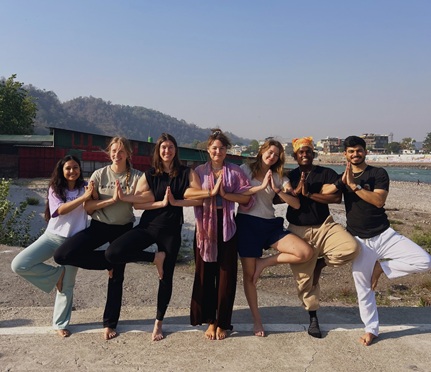
Vinyasa Yoga, often called flow yoga, is a style of yoga where you move smoothly from one pose to another while connecting each movement with your breath.
Instead of holding poses for a long time, you keep flowing in a sequence, almost like a gentle dance. Each movement is guided by your inhaling and exhaling, which creates a natural rhythm.
This continuous flow not only makes your body more flexible and strong but also helps calm your mind and improve focus.
Components of Vinyasa Yoga Poses
Vinyasa flow yoga is much more than measuring calories burnt and building core strength. Breath, movement, mantra, and other vinyasa methods all work to encourage the growth of consciousness and connection. And because all kinds of yoga foster presence, attention, and purpose, all of them have a vinyasa quality.
Simply put, it involves coordinating your thoughts and movements. Every vinyasa class will likely begin with a phase of setting intentions and conclude with a final relaxation. The structure, tempo, and other elements, however, will vary from class to class.
One Vinyasa yoga cycle is essentially a variation of Sun Salutation or Surya Namaskar. The two main changes are the beginning and ending positions. You start this yoga cycle with Plank Pose and end it with the Downward-Facing Dog (the sun salutation begins and ends with the Mountain Pose).
Vinyasa Yoga Benefits
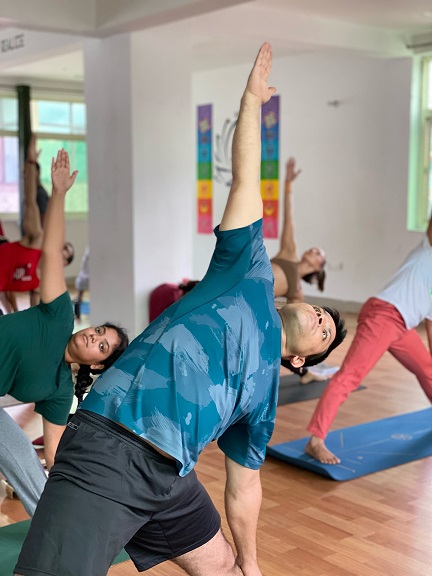
This vinyasa flow is very beneficial to your health. In addition to keeping you active, it also lowers stress, is suitable for people of all fitness levels, and enhances heart health.
1. Physical Well-Being
- Vinyasa flow yoga helps keep your body strong, flexible, and active. The continuous flow of movements increases your heart rate, which supports better cardiovascular health over time. With regular practice, it may help in managing blood pressure, improving circulation, and maintaining healthy cholesterol and blood sugar levels.
- It also strengthens muscles, improves posture, and enhances overall body coordination. Many practitioners notice increased energy levels and reduced stiffness, especially if they spend long hours sitting.
2. Mental Well-Being
- One of the most noticeable benefits of Vinyasa flow yoga is how it affects your mental state. The focus on breathing and movement helps calm the mind and brings your attention to the present moment.
- Regular practice can reduce stress, anxiety, and mental fatigue. Over time, it helps create a more positive mindset and improves emotional balance. Many people find that even a short Vinyasa session can leave them feeling more relaxed, clear-headed, and focused throughout the day.
3. Improves Flexibility and Balance
- As you move through different poses, your muscles gradually become more flexible. Vinyasa Yoga gently stretches the body while also building stability. This combination helps improve balance and reduces the risk of injury in daily life.
4. Supports Weight Management
- Because Vinyasa Yoga involves continuous movement, it can help burn calories and support weight management. It also builds lean muscle, which improves metabolism and overall body composition when practiced regularly.
5. Enhances Breath Awareness
- Breathing is a key part of Vinyasa flow yoga. Learning to move with your breath not only improves lung capacity but also helps control your energy and focus. This awareness can be useful beyond yoga, especially in managing stress and staying calm in daily situations.
Vinyasa Yoga Poses You Can Practice at Home
Considering the wide range of people who practise this yoga for its many benefits, it is divided into two types:
- Vinyasa Yoga for Beginners
- Vinyasa Yoga for Experts
Let’s discuss each of the Vinyasa yoga poses step-by-step.
Vinyasa Yoga for Beginners
1. Plank Pose (Kumbhakasana)
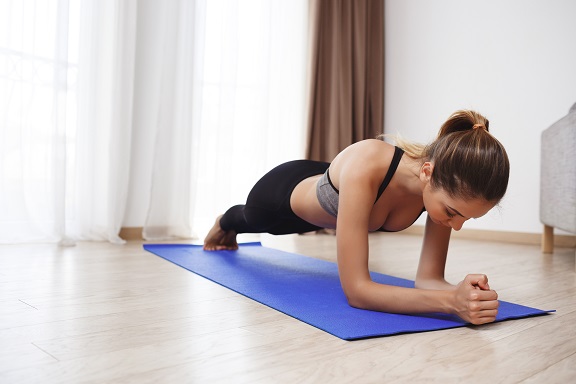
- The first pose in this yoga for beginners is the plank pose, or Kumbhakasana. This position helps to build strength in your abs, core, back, and legs.
- Breathe in as you raise your arms over your shoulders and place your feet at a distance the same as your hips in a high push-up position.
- Stretch out from your heels and forward towards the top of your head.
- You may indeed lower your knees to the floor if the plank position is too difficult for you.
2. Knees-Chest-Chin Pose (Ashtanga Namaskara)
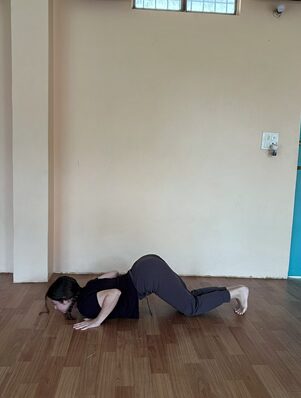
- Second, in the sequence of these yoga poses for beginners is the Knees-Chest-Chin Pose. This pose is excellent for warming you up and helps gain arm strength.
- While maintaining your elbows folded into your sides, breathe out as you bring your knees to the floor.
- Move your chin and chest to the floor while keeping your hips raised off the floor.
- Position your chest in such a way that it falls midway between your hands.
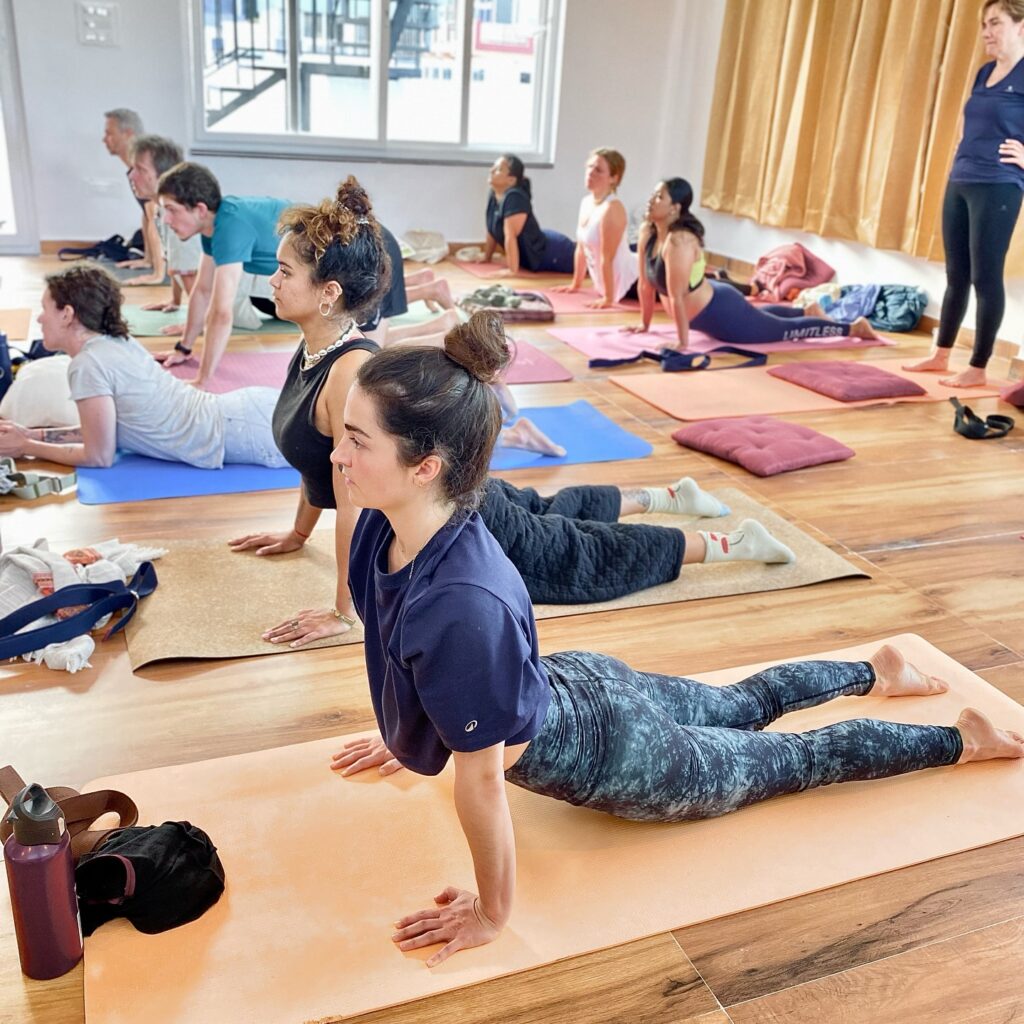
3. Cobra Pose (Bhujangasana)
- If your body feels stiff, this Vinyasa yoga pose is just for you. The Cobra pose not only stretches your chest, abs, and shoulders but also gives you a burst of energy and brightens up your mood.
- Take a deep breath in and advance to the Cobra position.
- Your chest will go forward and rise off the floor as you bring your hips to the floor. Instead of pressing down into your hands, try to let the power of this lift come from your back.
- While you secure your pelvis and the tops of your feet to the mat, place little to no weight on your hands.
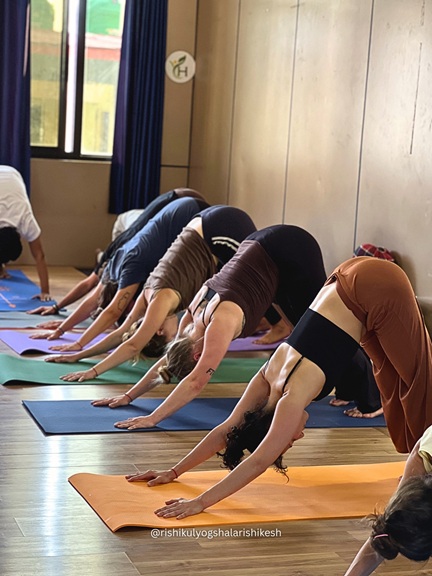
4. Downward-Facing Dog Pose (Adho Mukha Svanasana)
- The Vinyasa yoga sequence for beginners ends with the downward-facing dog pose.
- After rolling your toes over and putting your soles on the ground, exhale while lifting your hips.
- As you stretch your spine, press down with your hands and heels.
- Sit up straight and raise your belly high in the air.
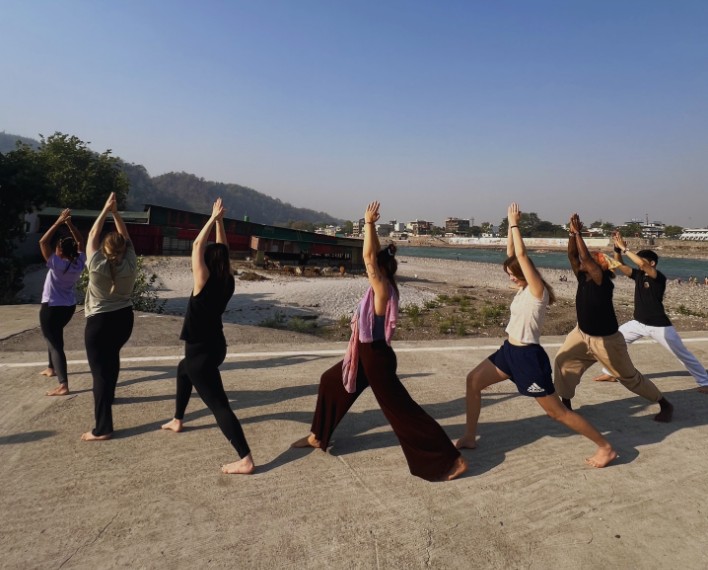
5. High Lunge (Alanasana)
- The next pose in this Vinyasa yoga sequence is the high lunge, also known as ‘Alanasana’. This pose helps to build strength in your legs, improve balance, and gently open your hips and chest.
- Breathe in as you step one foot forward between your hands from downward dog.
- Bend your front knee while keeping your back leg straight and active.
- Lift your upper body and raise your arms overhead, keeping your shoulders relaxed.
- Keep your front knee aligned with your ankle and engage your core for better balance.
- You can keep your hands on your hips if lifting your arms feels uncomfortable.
A Simple Vinyasa Yoga Sequence for Beginners
Knowing individual poses is one thing, but putting them together in a flow is where Vinyasa really clicks. Here’s a gentle sequence you can try at home, no experience needed. Each pose links naturally to the next, so just follow your breath.
Start in a comfortable standing position (Mountain Pose / Tadasana)
Step 1: Plank Pose (Kumbhakasana). Get into a high push-up position. Wrists under shoulders, body in one straight line. Hold for 3–5 breaths. This is your foundation.
Step 2: Knees-Chest-Chin (Ashtanga Namaskara). Exhale and lower your knees, chest, and chin to the mat — in that order — while keeping your hips lifted. A good transition pose that opens your chest before the backbend.
Step 3: Cobra Pose (Bhujangasana). Inhale and slowly lift your chest off the floor. Keep your elbows slightly bent and let your back do the work, not your hands. Hold for 2–3 breaths.
Step 4: Downward-Facing Dog (Adho Mukha Svanasana). Exhale, tuck your toes, and push your hips up and back. This is your reset pose — come back to it between every transition.
Step 5: High Lunge (Alanasana). Inhale and step your right foot forward. Raise your arms overhead, keep your back leg strong. Hold for 3 breaths, then return to Downward Dog and repeat on the left side.
Finish in Child’s Pose for 5–8 breaths
That’s one complete beginner Vinyasa cycle. With practice, you can repeat it 2–3 times, gradually building speed and breath control. Once this feels comfortable, you’re ready to move into the expert poses below.
Vinyasa Yoga for Experts
Moving on to the more advanced Vinyasa yoga poses.
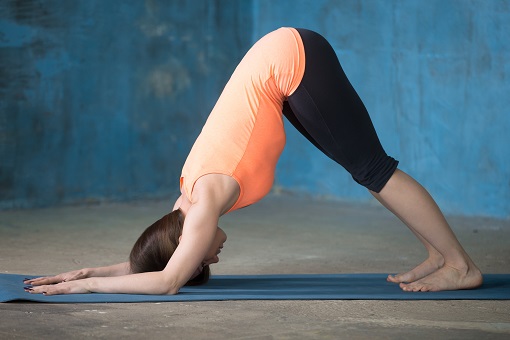
1. Dolphin Pose (Ardha Pincha Mayurasana)
- One of the key poses in a Vinyasa yoga sequence is the Dolphin Pose, also known as Ardha Pincha Mayurasana. This pose helps to build strength in your shoulders, arms, and core while improving overall stability and flexibility.
- Begin by coming onto your forearms and knees, keeping your elbows shoulder-width apart.
- Breathe in as you lift your hips up and straighten your legs, similar to Downward Dog.
- Press your forearms firmly into the mat and keep your head relaxed between your arms.
- Try to lengthen your spine and push your hips upward to deepen the stretch.
- If the pose feels too difficult, you can slightly bend your knees for support.
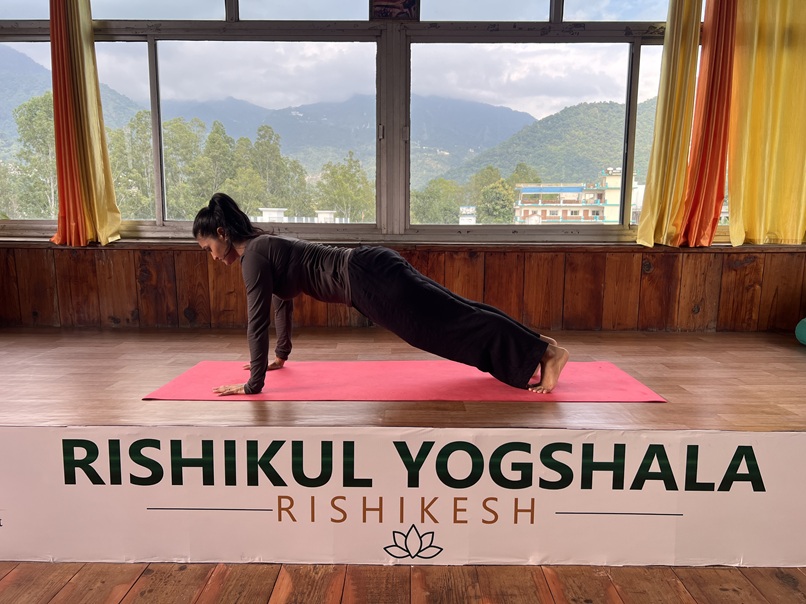
2. Four-Limbed Staff Pose (Chaturanga Dandasana)
- This yoga pose is mostly full-body yoga. But most importantly, it focuses on strengthening your back and core.
- While remaining approximately four inches over your mat, breathe out as you drop your body to the ground.
- Maintain a sideways tuck with your elbows. Reach your heels as you straighten your legs.
Also Read: How Chaturanga Dandasana Can Help You Feel More Grounded And Centered?
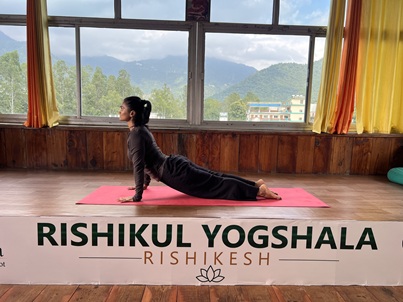
3. Upward-Facing Dog Pose (Urdhva Mukha Svanasana)
- The upward-facing dog pose helps open up your chest cavity and collarbones and stimulates your abdominal as well as back muscles.
- Upward-Facing Dog is achieved by inhaling, straightening your arms, lowering your hips, and rolling over your toes to the tips of your feet.
- If doing it one at a time works better for you, flip the feet individually.
- To keep your thighs up off the ground, squeeze your hands and feet together.
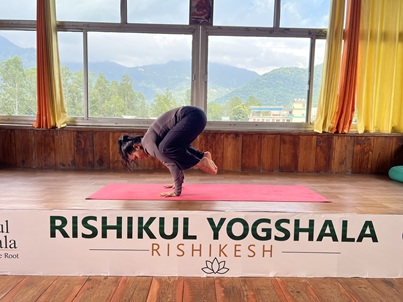
- Continue to move your shoulders away from your ears.
4. Crow Pose (Bakasana)
- One of the more advanced poses in this Vinyasa yoga sequence is the Crow Pose, also known as Bakasana. This pose helps to build strong arms, improve balance, and increase focus and body control.
- Start by coming into a squat position with your feet close together.
- Place your hands firmly on the mat in front of you and bend your elbows slightly.
- Lift your hips and gently place your knees on the back of your upper arms.
- Slowly shift your weight forward and try to lift your feet off the ground.
- Keep your gaze slightly forward to help maintain balance and stay steady.
- If this pose feels difficult, you can practice by lifting one foot at a time.
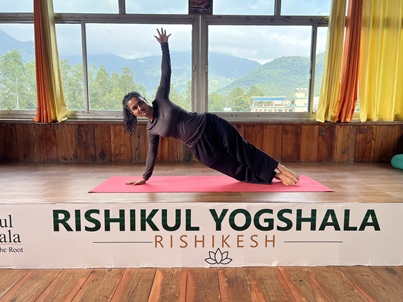
5. Side Plank (Vasisthasana)
- Another important pose in this Vinyasa flow yoga sequence is the side plank, or Vasisthasana. This pose helps build core strength, improve balance, and increase overall body control.
- Start in a plank position with your shoulders aligned over your wrists.
- Shift your weight onto one hand and slowly turn your body to one side.
- Breathe in as you lift your top arm towards the ceiling and stack your feet.
- Keep your body in a straight line and avoid letting your hips drop.
- If the pose feels too difficult, you can place your bottom knee on the floor for support.
Also Read: Hatha Yoga Vs Vinyasa Yoga: How Are They Different From One Another?
Vinyasa Yoga vs Hatha Yoga — What’s the Real Difference?
People often ask this, especially when they’re just starting out. Both are valid paths; they just suit different people and different days.
In Hatha yoga, you hold each pose for several breaths before moving on. The pace is slower, and the focus is on alignment and stillness. It’s a good choice when your body needs rest, but your mind needs structure.
In Vinyasa yoga, you’re moving almost constantly, and each pose flows into the next on the breath. There’s no long pause between shapes. It feels more dynamic, almost like a moving meditation when you get the hang of it.
A simple way to think of it: Hatha is like learning individual words clearly and slowly. Vinyasa is like speaking those same words in a sentence, at a natural speed.
Neither is harder nor easier; they’re just different. Many practitioners actually use both: Hatha sessions when they need to slow down and work on specific poses, and Vinyasa when they want movement, energy, and a light sweat.
If you’re brand new to yoga, starting with Hatha for a few weeks before moving to Vinyasa gives you a stronger foundation. But if you prefer learning by moving, there’s no reason you can’t jump straight into a beginner Vinyasa class.
Conclusion
All of the movements in Vinyasa yoga are rhythmic and matched to the breath. Vinyasa classes are excellent for active students since they can be more intensive than other types of yoga, depending on the tempo. Probably give vinyasa a try if you’re searching for a sweaty flow. For those interested in deepening their practice, consider enrolling in Rishikul Yogshala Rishikesh’s 200 Hour Yoga TTC in Rishikesh and 300 Yoga Teacher Training.
Vinyasa Yoga Poses FAQs
Q1. Is Vinyasa Yoga suitable for beginners?
Ans: Yes, Vinyasa yoga is suitable for beginners, as long as you start with a class or guide specifically designed for beginners. The key is learning a handful of foundational poses first so the transitions feel natural. Beginner Vinyasa classes move at a slower pace and often include modifications.
Q2. How often should I practice Vinyasa Yoga?
Ans: For beginners, 3 times a week is a good starting point. It gives your body enough time to recover between sessions while still building strength and flexibility. Once you’re comfortable, you can increase to 5 sessions a week if your schedule and energy allow.
Q3. Is Vinyasa Yoga good for weight loss?
Ans: Vinyasa yoga can support weight loss when practiced consistently. Because you’re moving continuously, your heart rate stays elevated — making it one of the more calorie-burning styles of yoga. Combined with a balanced diet, regular practice does contribute to gradual and sustainable weight management.
Q4. What is the difference between Vinyasa Yoga and Hatha Yoga?
Ans: Hatha yoga holds each pose for several breaths at a slower pace. Vinyasa yoga moves continuously, linking each pose to an inhale or exhale. Hatha is better for learning alignment; Vinyasa is better for building flow, stamina, and breath awareness. Both are effective, they simply suit different goals and moods.
Q5. Do I need to be flexible to start Vinyasa Yoga?
Ans: No, you don’t need to be flexible before starting Vinyasa yoga. Flexibility is something you build through practice, not something you need before you begin. Most poses have modifications that work for stiff or tight bodies. Show up as you are — the flexibility follows naturally with time.
Q6. Can I practice Vinyasa Yoga at home?
Ans: Yes, you can practice Vinyasa yoga at home. All you need is a yoga mat and enough floor space to stretch your arms and legs fully. Following a guided video or a written sequence — like the beginner flow in this guide — is a good way to start safely without a studio.
Q7. What are the main benefits of Vinyasa Yoga?
Ans: The main benefits of Vinyasa yoga include improved cardiovascular health, greater flexibility, stronger muscles, reduced stress, and better breath awareness. The breath-movement connection also sharpens focus and mental clarity. With regular practice, many people notice better posture, improved sleep, and a more settled, calm mind throughout the day.
Q8. How long should a Vinyasa Yoga session be?
Ans: A beginner Vinyasa session of 20–30 minutes is enough to feel the benefits without overdoing it. As you build stamina, working up to 45–60 minutes is a common goal. The most important thing is consistency — a 20-minute session done regularly will serve you far better than a long session done once a week.
This article is for general information and is not medical advice. If you have a respiratory or heart condition, are pregnant, or are unsure whether these practices suit you, please speak to your doctor before beginning.

 +91-8433225327,
 Rishikul Yogshala Rishikesh, Narayan Kunj, Jonk Village, Ram Jhula, Swarg Ashram, Rishikesh, Uttarakhand 249304
 By Airway
 By Railway
 By Bus/Cabs