








Pranayama: A Gentle Guide to Breath Practices for Body and Mind
Table of Contents
- What is the Meaning of Pranayama?
- Pranayama Has Four Main Parts, Which Are:
- How Does Pranayama Help To Cleanse The Body and Mind?
- Benefits of Pranayama:
- Cleansing the Body:
- Cleansing the Mind:
- Types of Pranayama: 10 Breathing Practices and How to Do Them
- 1. Dirga Pranayama (Three-Part Breath)
- 2. Nadi Shodhana (Alternate Nostril Breathing)
- 3. Ujjayi Pranayama (Victorious or Ocean Breath)
- 4. Bhramari Pranayama (Humming Bee Breath)
- 5. Kapalbhati (Skull Shining Breath)
- 6. Bhastrika (Bellows Breath)
- 7. Sheetali Pranayama (Cooling Breath)
- 8. Sheetkari Pranayama (Hissing Breath)
- 9. Sama Vritti (Equal Breathing)
- 10. Surya Bhedana and Chandra Bhedana (Sun and Moon Breath)
- Which Pranayama Should You Practise, and When?
- Pranayama for Specific Problems
- A Four-Week Plan for Beginners
- Safety, Cautions and Common Mistakes
- Conclusion
- Frequently Asked Questions About Pranayama
- Can I practise pranayama every day?
- How long should a beginner practise?
- What is the best time of day?
- Should pranayama come before or after asana?
- Do I have to practise on an empty stomach?
- Can I do pranayama lying down?
- What is the difference between pranayama and modern breathwork?
- Is Kapalabhati safe if I have high blood pressure?
- How soon will I notice anything?
- Can I learn pranayama from videos?
Notice the next breath you take. Without changing it, simply notice. That quiet act of awareness is the doorway to pranayama — the yoga of breath. In Sanskrit, prana means life force and ayama means expansion, so pranayama is the gentle practice of expanding our awareness through how we breathe. In this guide, we’ll explore what pranayama is, what happens in a single breath cycle, and a few simple practices to bring this into your day.
Although you can practice a variety of easy breath control yoga on your own, you should seek guidance from an experienced yoga teacher as you progress, especially if you are considering advanced techniques. So, consider joining the Yoga Teacher Training in Rishikesh to learn the correct techniques of practising Pranayama and get the maximum benefits. This article will serve as a complete guide on how it helps cleanse the body and mind.
What is the Meaning of Pranayama?
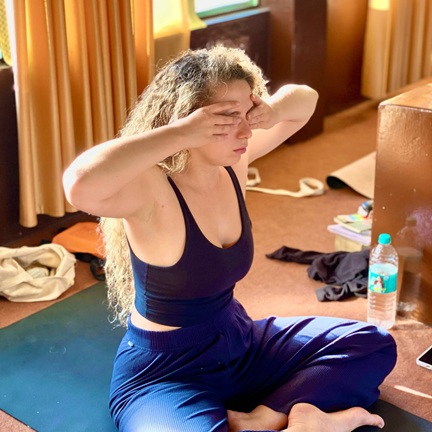
The word Pranayama is made up of two words, where Prana refers to “vital energy” or “life force” that controls everything in the body, while Ayama refers to “expansion” or “length”. Thus, this is a yogic technique of controlling your breath in different lengths and durations, which helps in the expansion of Prana.
Pranayama Has Four Main Parts, Which Are:
- Exhalation (Rechaka): The controlled and intentional process of expelling air from the lungs is called exhalation.
- Inhalation (Puraka): Consciously filling the lungs with air is called Inhalation.
- External Breath Suspension (Bahya-kumbhaka): A conscious pause of a few moments after exhalation, when the breath is held outside the body, is called external breath suspension.
- Internal Breath Retention (Antar-Kumbhaka): Deliberately holding the breath inside the body after inhaling is called internal breath retention.
All four components are an important part of breath control yoga that increases oxygen absorption in the body, stimulates the nervous system, and encourages a deeper connection between the physical and mental aspects of the practitioner.
Beginners can focus on Pranayama, which involves only Inhalation and exhalation. Advanced versions of this, which include internal retention, external suspension, various bandhas, and postures, are advised to be learned under the guidance of a qualified instructor. You can learn yoga and meditation along with Pranayama in our comprehensive 200-Hour Yoga TTC in Rishikesh.
How Does Pranayama Help To Cleanse The Body and Mind?
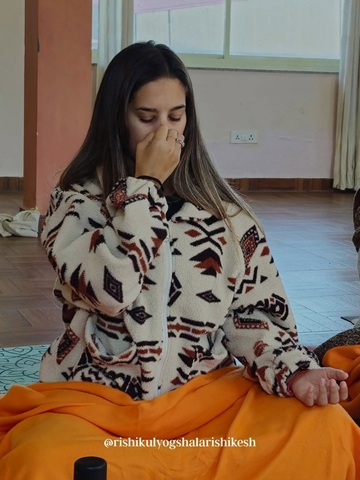
The practice of conscious breath control provides a holistic approach to purifying both the body and mind. Many specific breathing techniques are practised in various pranayamas, like Anulom-Vilom Pranayama, Brahmari Pranayama, Kapalabhati Pranayama, etc, that contribute to the comprehensive purification process of the practitioner.
Benefits of Pranayama:
Let’s learn about the benefits of breath control yoga for body and mind:
Cleansing the Body:
- Supports the body’s natural processes: From a yogic perspective, conscious breathing is associated with purification and balance. Physiologically, regular breathing practices may support relaxation, respiratory function, and overall well-being.
- Increases blood circulation: Controlled breathing during asanas increases blood circulation throughout the body, which ensures an adequate supply of nutrients and oxygen to all cells.
- Strengthens lung function: Regular practice of it helps increase the strength and health of the lungs and the entire respiratory system.
- Digestive System Support: Pranayamas such as Kapalabhati involve rhythmic abdominal contractions that stimulate the digestive organs. It helps improve digestion, improves the absorption of nutrients, and eliminates waste from the digestive tract.
- Improve posture: The breathing techniques often involve sitting cross-legged and keeping the spine straight. It helps the practitioner improve posture and reduce the chances of muscle- and bone-related problems.
Cleansing the Mind:
- Reduces anxiety and stress: Slow and deep breathing in this asana helps reduce anxiety and stress levels, promoting peace and calmness.
- Increases concentration and focus: It increases concentration and focus by making you more aware of the present moment. It helps you stay focused on tasks, thus increasing productivity.
- Promotes mind-body connection: Regular practice of breath control yoga increases the strong relationship between mind and body. This interconnectedness of mind and body increases self-awareness and enhances overall well-being.
- Maintains emotional stability: It keeps your mind calm, which helps keep emotions balanced and stable. Regular practice of mindful breathing enables you to deal better with challenges and enjoy a contented life.
- Promotes deeper meditation: Mindful breathing practices calm your mind and help you connect more deeply with your inner self during meditation. This increased self-awareness makes meditation more meaningful and peaceful.
In yoga, breath is considered the source of Prana Shakti (life force) and the essence of life. It is believed to flow throughout the body and thus affect both physical and mental health. Breath control yoga serves as a method of interacting with this vital life force, promoting health and balance and contributing to overall well-being.
To understand and learn the invocation of this vital life force through Yoga, meditation, and asanas, you can join our 200 Hour Yoga Course in Rishikesh at our Renowned Yoga School.
Types of Pranayama: 10 Breathing Practices and How to Do Them
There is no single practice called “pranayama.” It is a whole family of breathing techniques, and they do very different things. Some cool you down. Some heat you up. Some are meant to steady the mind before meditation, and a couple are strong enough that we don’t teach them to students in their first week at all.
Here are the ones worth knowing, roughly in the order we introduce them in Rishikesh.
1. Dirga Pranayama (Three-Part Breath)
Start here if you have never done any breathwork. It teaches you to actually use your full lungs, which most adults have quietly stopped doing.
Sit comfortably or lie on your back. Put one hand on your belly and one on your ribs. Breathe in slowly and let the belly rise first. Keep breathing in and feel the ribs widen. Finish the inhale in the upper chest. Then let it out in reverse: chest, ribs, belly. That is one round.
Do 8 to 10 rounds. No holding, no counting pressure. If you feel lightheaded, you are pulling too hard.
Good for: learning breath awareness, calming a busy mind, absolute beginners.
2. Nadi Shodhana (Alternate Nostril Breathing)
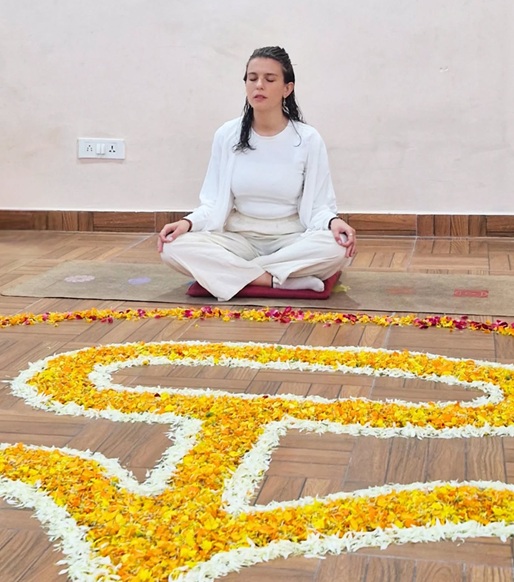
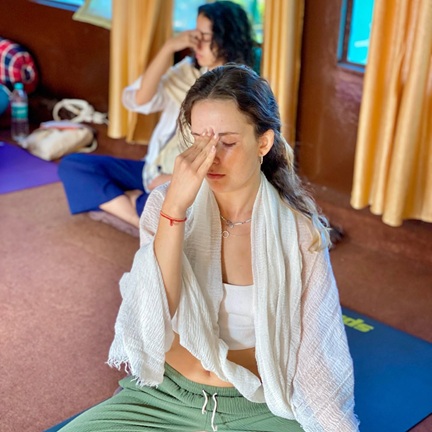
Also called Anulom Vilom. If you only ever learn one pranayama, learn this one.
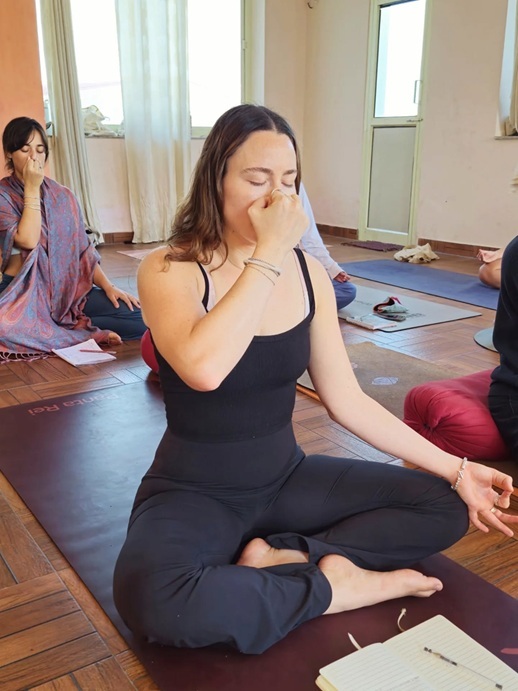
Sit with a straight spine. Use your right hand. Fold the index and middle fingers into the palm. Close the right nostril with the thumb and breathe in through the left. Close the left nostril with the ring finger, release the thumb, and breathe out through the right. Now breathe in through the right, close it, and breathe out through the left. That completes one round.
Begin with 5 minutes. Keep the breath quiet enough that someone sitting next to you couldn’t hear it.
Good for: anxiety, mental fog, settling before meditation or sleep.
Read More: Nadi Shodhana Pranayama: A Gentle Guide to the Energy-Channel Purification Breath
3. Ujjayi Pranayama (Victorious or Ocean Breath)
This is the soft hissing sound you hear in a vinyasa class.
Breathe in and out through the nose, but gently narrow the back of the throat, the same way you would if you were fogging a mirror with your mouth closed. The breath makes a low ocean sound. Keep the inhale and exhale the same length.
Practise it on its own for 5 minutes sitting still, or carry it through your asana practice.
Good for: building focus, warming the body, steadying the breath during movement.
Read More: Ujjayi Pranayama: A Gentle Guide to the Victorious Breath
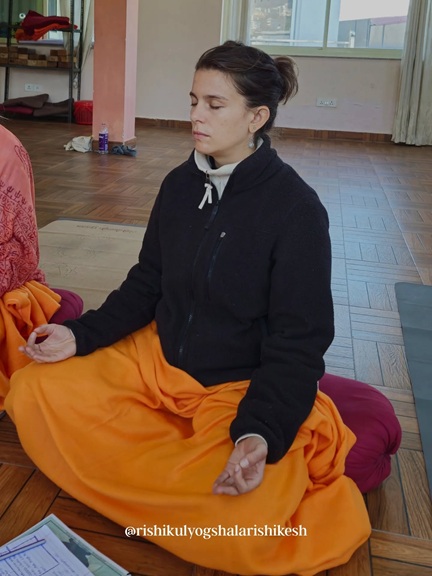
4. Bhramari Pranayama (Humming Bee Breath)
The fastest way we know to quiet a racing mind, and it works within a few minutes.
Sit upright. Close your eyes and gently plug your ears with your thumbs, resting your fingers lightly on your face. Breathe in through the nose. As you breathe out, hum a steady low sound, all the way to the end of the breath. Feel the vibration in your skull.
Six to eight rounds is enough. Sit quietly for a minute afterwards before you open your eyes.
Good for: anxiety, insomnia, headaches, anger, that wired feeling late at night.
Also Read: Bhramari Pranayama (Humming Bee Breath): Meaning, Steps, Benefits, and Precautions
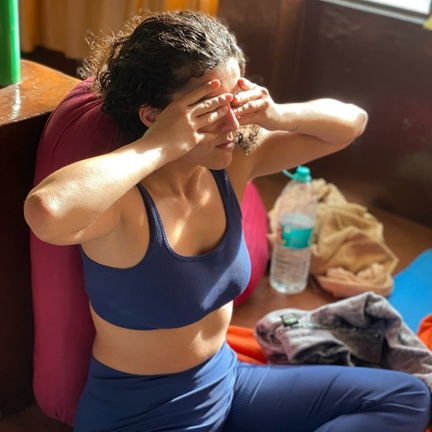
5. Kapalbhati (Skull Shining Breath)
A cleansing practice, and a strong one. This is where people get careless.
Sit tall. Take a normal breath in. Then push the air out in a sharp burst by snapping the lower belly in. Let the inhale happen by itself as the belly relaxes. The exhale is active, the inhale is passive. Aim for around one pump per second.
Start with 20 pumps, rest, and take a few normal breaths. Build to three rounds of 30 over several weeks. Empty stomach only.
Good for: morning sluggishness, digestion, clearing the head.
Skip it if: you are pregnant, have high blood pressure, heart problems, hernia, ulcers, epilepsy, or are menstruating.
Read More: Kapalbhati Pranayama: A Gentle Guide to the Skull-Shining Breath
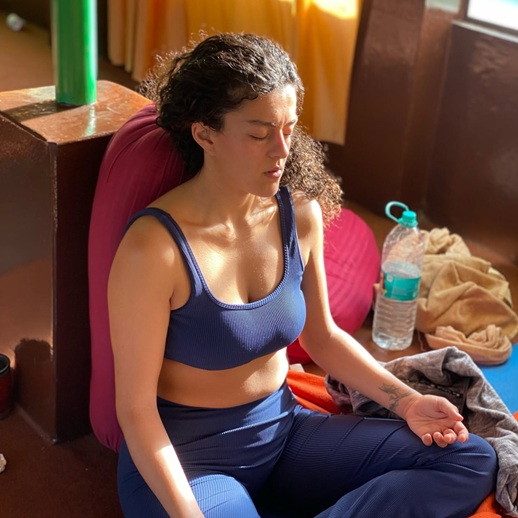
6. Bhastrika (Bellows Breath)
Often confused with Kapalabhati. The difference: here both the inhale and the exhale are forceful, like a blacksmith’s bellows.
Sit with a straight spine. Breathe in fully and forcefully through the nose, then out with the same force. Belly moves out on the inhale, in on the exhale. Keep the rhythm even. Do 10 breaths, then rest and breathe normally for 30 seconds.
Two or three rounds is plenty. Stop immediately if you feel dizzy.
Good for: low energy, cold mornings, waking up the system.
Skip it if: you have high blood pressure, heart conditions, or are pregnant.
Read More: Bhastrika Pranayama: A Gentle Guide to the Bellows Breath
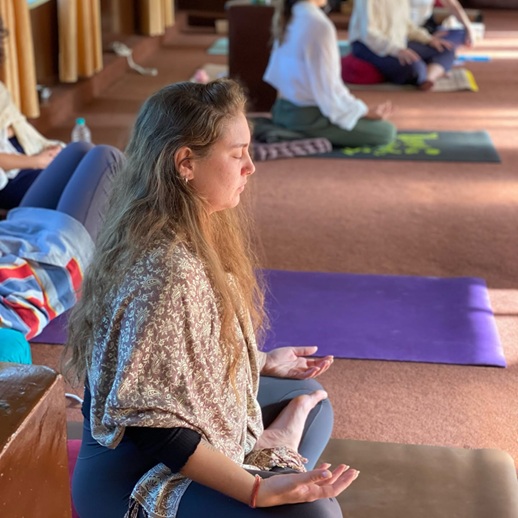
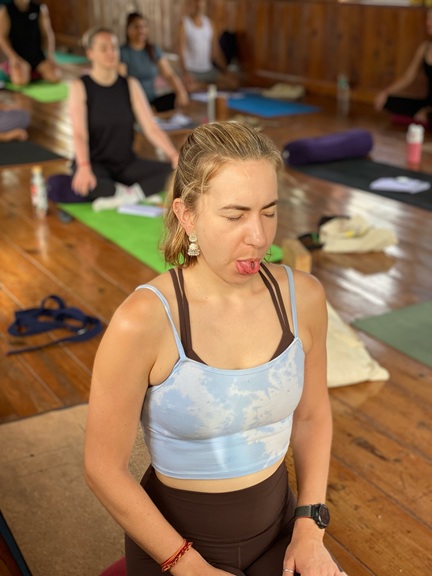
7. Sheetali Pranayama (Cooling Breath)
Roll your tongue into a tube. If you can’t roll it, use Sheetkari instead (see below).
Stick the rolled tongue slightly past the lips and sip the air in through it, like drinking through a straw. Close the mouth, and breathe out slowly through the nose. The incoming air feels genuinely cold.
Eight to ten rounds. Wonderful in May and June in Rishikesh, when it is 40 degrees by ten in the morning.
Good for: heat, acidity, irritability, hot flushes, thirst.
Skip it if: you have a cold, cough, asthma, or low blood pressure, or in cold weather.
8. Sheetkari Pranayama (Hissing Breath)
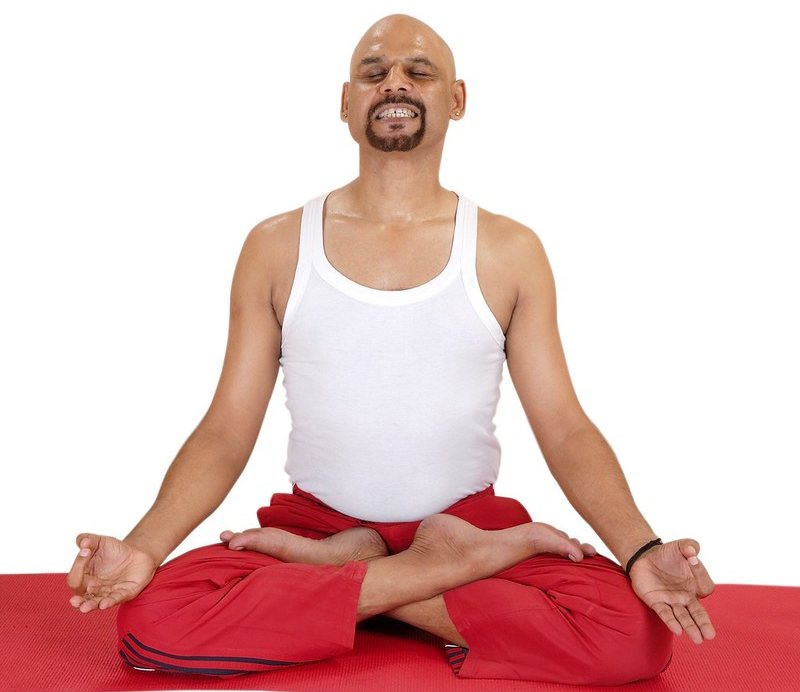
Same purpose as Sheetali, for people who can’t roll the tongue.
Bring the teeth lightly together and part the lips so the teeth show. Breathe in through the teeth with a soft hissing sound. Close the mouth and breathe out through the nose.
Eight to ten rounds. Same cautions as Sheetali.
Good for: cooling, and it also settles the gums and mouth.
Read More: Shitkari Pranayama: A Gentle Guide to the Hissing Cooling Breath
9. Sama Vritti (Equal Breathing)
The simplest counting practice, and the one to reach for when you are anxious in public and can’t do anything visible.
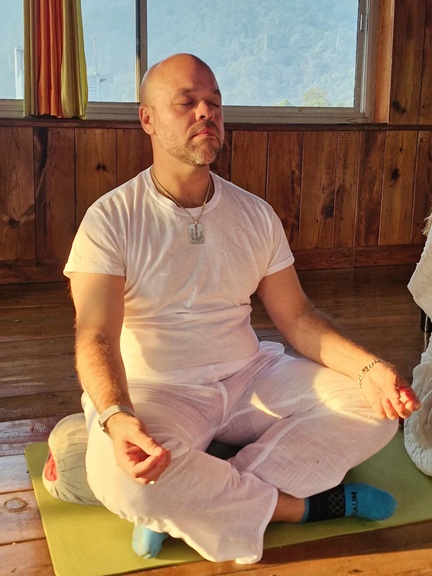
Breathe in for a count of four. Breathe out for a count of four. That’s it. Once that is comfortable, add a gentle pause: in for four, hold for four, out for four, hold for four. This is sometimes called box breathing.
Five minutes. Nobody around you will notice you are doing it.
Good for: nerves before something stressful, focus, getting to sleep.
10. Surya Bhedana and Chandra Bhedana (Sun and Moon Breath)
Two single-nostril practices that pull in opposite directions.
For Surya Bhedana, breathe in through the right nostril only and out through the left. It is heating and energising. Good on a dull winter morning.
For Chandra Bhedana, breathe in through the left nostril and out through the right. It is cooling and quietening. Good in the evening.
Nine to twelve rounds. Don’t practise Surya Bhedana at night or with high blood pressure, and skip Chandra Bhedana if you are already feeling low or sluggish.
Which Pranayama Should You Practise, and When?
| Technique | What it does | Best time | Level | Avoid if |
|---|---|---|---|---|
| Dirga | Grounds, teaches full breathing | Anytime | Beginner | Nothing, safe for most |
| Nadi Shodhana | Balances, calms | Morning or evening | Beginner | Nose fully blocked |
| Ujjayi | Focuses, warms gently | With asana practice | Beginner | Sore throat |
| Bhramari | Quiets the mind fast | Before sleep | Beginner | Ear infection |
| Kapalabhati | Energises, cleanses | Early morning, empty stomach | Intermediate | Pregnancy, high BP, heart issues, hernia, epilepsy |
| Bhastrika | Strong energy boost | Morning, cold weather | Intermediate | High BP, heart issues, pregnancy |
| Sheetali / Sheetkari | Cools the body | Hot afternoons | Beginner | Cold, cough, asthma, low BP |
| Sama Vritti | Steadies nerves | Anytime, anywhere | Beginner | Nothing, safe for most |
| Surya Bhedana | Heats, activates | Morning | Intermediate | High BP, evening practice |
| Chandra Bhedana | Cools, settles | Evening | Intermediate | Low energy, depression |
Pranayama for Specific Problems
People rarely come to breathwork out of curiosity. They come because something is bothering them. Here is what we usually suggest.
For anxiety and panic. Bhramari first, then Nadi Shodhana. The humming in Bhramari gives the mind something physical to hold on to, which is more useful than being told to relax. Ten minutes, twice a day. If you feel panic rising in a public place, use Sama Vritti instead, since nobody can see you doing it.
For sleep. Chandra Bhedana or Bhramari, done sitting on the edge of the bed about twenty minutes before you lie down. Keep the exhale longer than the inhale, roughly four in and six or eight out. The long exhale is the part that matters.
For high blood pressure. Slow practices only. Nadi Shodhana without any breath retention, and Bhramari. Avoid Kapalabhati, Bhastrika and Surya Bhedana entirely, and avoid all breath holding. Talk to your doctor before you begin, and keep taking whatever you have been prescribed.
For asthma and weak lungs. Dirga to rebuild the habit of full breathing, then Ujjayi. Both are slow and neither strains the airways. Keep your inhaler nearby, practise in a warm room, and stop if you feel any tightness. Cooling practices like Sheetali are not suitable here.
For digestion and bloating. Kapalabhati on an empty stomach in the morning, if none of the cautions apply to you. Otherwise, Dirga with a deliberate belly movement works well and is far gentler.
For focus and study. Ujjayi or Nadi Shodhana for five minutes before you sit down to work. Short and regular beats long and occasional.
A Four-Week Plan for Beginners
Most people quit breathwork because they try Kapalabhati on day one, feel dizzy, and decide it isn’t for them. Build slowly instead.
| Week | Practice | Time |
|---|---|---|
| Week 1 | Dirga only. Learn to fill and empty the lungs properly. | 5 min daily |
| Week 2 | Dirga for 3 min, then Nadi Shodhana for 5 min. | 8 min daily |
| Week 3 | Nadi Shodhana for 8 min, then Bhramari for 6 rounds. | 10 min daily |
| Week 4 | Add Ujjayi for 5 min. Add Kapalabhati only if you have no health cautions, starting at 20 pumps. | 15 min daily |
Practise at the same time every day if you can. Early morning before food is traditional and it does work better, but a consistent evening practice beats an inconsistent morning one.
By the end of four weeks most people notice they sleep more easily and that their breath is quieter at rest. Bigger changes take a few months.
Safety, Cautions and Common Mistakes
Pranayama is gentle when it is done properly and genuinely unhelpful when it isn’t. A few things to keep in mind.
Who should be careful. If you are pregnant, avoid all forceful practices and all breath retention. If you have high or low blood pressure, a heart condition, epilepsy, glaucoma, a hernia, an ulcer, or you have had surgery in the last few months, talk to your doctor first, and learn from a teacher in person rather than from a screen. Children under twelve should stick to simple observation of the breath.
Signs to stop. Dizziness, tingling in the hands or face, a racing heart, chest tightness, ringing in the ears, or nausea. Stop, breathe normally, and sit quietly. None of these are things to push through.
Five mistakes we correct constantly:
- Forcing the breath. If your shoulders lift or your face tightens, you are working too hard. The breath should feel long, not big.
- Practising after eating. Wait at least three hours after a full meal, or two after something light.
- Adding retention too early. Kumbhaka, breath holding, is the part that can genuinely go wrong. Leave it alone for the first several months and only add it with a teacher watching.
- Slumping. A rounded spine closes the ribs and the diaphragm can’t move. Sit against a wall or on a cushion if you need to.
- Breathing through the mouth. Everything here is nose breathing, except Sheetali and Sheetkari. If your nose is blocked, clear it first or choose a different day.
One more thing worth saying plainly: pranayama supports your health; it does not replace medicine. If you have a diagnosed condition, keep your doctor in the loop.
Conclusion
Breathing is the one thing your body does automatically that you can also take charge of whenever you choose. That is the whole reason pranayama exists. Once you start paying attention to the breath, you are no longer just reacting to how you feel. You have a way in.
Start small. Five minutes of Dirga or Nadi Shodhana, at roughly the same time each day, will do more for you than an ambitious forty-minute session you abandon by the weekend. Leave the strong practices alone until the simple ones feel easy. And take the cautions seriously, because the same breath that steadies you can unsettle you when it is forced.
There comes a point, though, where reading stops being enough. You can learn the shape of Nadi Shodhana from a page like this one. What you cannot get from a page is someone noticing that your shoulders lift on every inhale, or that you are holding tension in your jaw, or that you are ready for kumbhaka but have been avoiding it. The classical texts were insistent about this, and they were right.
That is the part a proper training gives you. At Rishikul Yogshala Rishikesh, pranayama is not a ten-minute add-on at the end of the morning asana class. It is taught alongside anatomy, the subtle body, bandhas and philosophy, so you understand why a practice is cooling or heating rather than memorising a list. Our teachers have been doing this on the banks of the Ganga since 2010, in a town where these practices have been passed from teacher to student for a very long time.
If you want to take your breath work beyond what an article can teach, a yoga teacher training in Rishikesh is the most direct way to get there. Most people join our 200-hour course to deepen their own practice first, and find the teaching qualification is simply what comes with it.
Come and breathe with us in Rishikesh. Your practice will not sound the same afterwards.
Frequently Asked Questions About Pranayama
Can I practise pranayama every day?
Yes, and daily practice is where the benefit comes from. Ten to fifteen minutes a day does more than an hour once a week. Keep forceful practices like Kapalabhati and Bhastrika to once a day, in the morning.
How long should a beginner practise?
Five minutes to start. Build to fifteen or twenty over a couple of months. Sitting for forty minutes on your first day usually leads to a sore back and no second day.
What is the best time of day?
Between roughly 4 and 6 in the morning, the brahma muhurta, is the traditional answer, and the air and the mind are both quieter then. Any time on an empty stomach works. Evening practice should be calming rather than energising.
Should pranayama come before or after asana?
After. Asana loosens the body and settles restlessness, which makes sitting still much easier. Pranayama then leads naturally into meditation.
Do I have to practise on an empty stomach?
For the forceful practices, yes, without exception. For gentle ones like Dirga, Nadi Shodhana and Bhramari, a two-hour gap after a light meal is fine.
Can I do pranayama lying down?
Dirga, yes. Everything else should be done sitting with the spine upright, because the diaphragm and ribs need room to move. A chair is perfectly acceptable if the floor is uncomfortable.
What is the difference between pranayama and modern breathwork?
The mechanics overlap. The aim doesn’t. Modern breathwork is usually after a physiological result, calmer nerves or more energy. Pranayama has those effects too, but it sits inside a larger system, and its purpose in that system is to steady the mind for meditation.
Is Kapalabhati safe if I have high blood pressure?
No. Kapalabhati, Bhastrika and Surya Bhedana are all unsuitable with high blood pressure. Use Nadi Shodhana without retention, and Bhramari.
How soon will I notice anything?
Something on the first day, usually. Most people feel calmer within a few minutes of Bhramari. Sleep tends to improve in two to three weeks. Changes in stamina and lung capacity take a few months of steady practice.
Can I learn pranayama from videos?
The basics, yes. Dirga, Nadi Shodhana and Bhramari are hard to get badly wrong. Retention, bandhas and the stronger cleansing practices need someone in the room who can see your face and tell you to stop.

 +91-8433225327,
 Rishikul Yogshala Rishikesh, Narayan Kunj, Jonk Village, Ram Jhula, Swarg Ashram, Rishikesh, Uttarakhand 249304
 By Airway
 By Railway
 By Bus/Cabs