








Vajrasana (Thunderbolt Pose): Benefits, Steps & Precautions
Table of Contents
- What is Vajrasana?
- Vajrasana Benefits (वज्रासन के फायदे)
- 1. Circulatory Health Benefit of Vajrasana (वज्रासन)
- 2. Digestive Health Benefits of Vajrasana
- 3. Mental Health Benefits of Vajrasana
- 4. Bone Health Benefits of Vajrasana
- 5. Reproductive Health Benefits of Vajrasana
- How To Do The Vajrasana Posture (वज्रासन कैसे करते हैं)
- For how long should you hold the Vajrasana Posture?
- Common Mistakes in Vajrasana (And How to Fix Them)
- Why Do My Legs Go Numb in Vajrasana?
- Vajrasana and Diabetes
- How Long After Eating, and How Long to Sit?
- Vajrasana vs Sukhasana vs Padmasana: Which Seat Should You Use?
- Variations of Vajrasana
- Safety Precautions for the Vajrasana Posture
- Modifications of Vajrasana Pose
- Final Thoughts
- Vajrasana Pose FAQs
- What are the benefits of the Vajrasana pose?
- How long should you sit in Vajrasana?
- Does Vajrasana reduce belly fat?
- Is Vajrasana good for meditation?
- Who should avoid Vajrasana?
Most yoga poses ask you to be on an empty stomach. Vajrasana — the Thunderbolt Pose — is the kind exception. It’s a simple kneeling pose, traditionally practised for a few minutes after meals to gently support digestion. In this guide, we’ll meet Vajrasana with care, walk through how to sit in it comfortably, and explore the quiet benefits that have made it a favourite for thousands of years.
Many people turn to Vajrasana for better digestion, improved posture, and a calmer mind. It doesn’t require flexibility or strength, which is why beginners often find it simple to start with. At the same time, those with regular practice also include it in their routine for its steady and grounding effect.
In this blog, we will look at how to do Vajrasana correctly, along with its benefits, common mistakes, and a few important precautions to keep in mind.
What is Vajrasana?
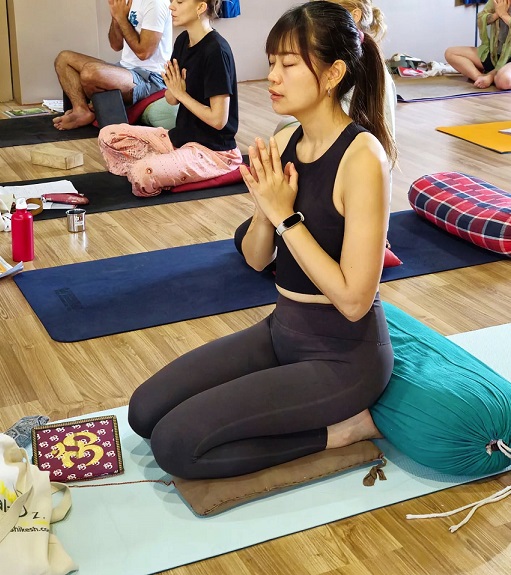
Vajrasana is a simple sitting yoga pose where you kneel down and sit back on your heels. The word comes from Sanskrit, where “vajra” means thunderbolt or diamond, a symbol of strength and stability, and “asana” means posture.
This pose is often considered one of the easiest to practise, which makes it a good starting point for beginners. At the same time, it is widely used in traditional yoga because of its practical benefits in daily life.
One of the main reasons Vajrasana is so popular is that it can be practised even after meals. Many yoga teachers recommend sitting in this posture for a few minutes after eating to support better digestion.
Regular practice of this asana may help improve posture by keeping the spine upright. It also encourages a calm and steady state of mind while gently supporting the digestive system. Since it does not require flexibility or strength, people of different age groups can include it in their routine with ease.
Vajrasana Benefits (वज्रासन के फायदे)
Numerous studies have suggested that this asana has advantageous health effects. Vajrasana benefits (vajra pose benefits) include improved posture, better digestion, and enhanced flexibility, making it an ideal pose for those looking to increase height and promote overall well-being. Let’s discuss some Vajrasana pose benefits:
- A study of 12 patients found that Vajrasana (वज्रासन) and other yoga asanas helped those with lower back pain feel less uncomfortable.
- Vajrasana, along with Padmasana, Halasana, Shavasana, and Paschimottanasana, is one of the poses that are beneficial for hypertension.
- Vajrasana and other yoga training stances may enhance performance that requires focus.
Now let’s look at each of the benefits of sitting in Vajrasana (वज्रासन के लाभ) in greater detail.
1. Circulatory Health Benefit of Vajrasana (वज्रासन)
Blood circulation is greatly improved by this asana. It enhances the pelvic region’s blood flow, especially. The entire body’s circulatory system is controlled by breathing at the same time.
2. Digestive Health Benefits of Vajrasana
This asana practice benefits our digestive system in a variety of ways. Our bowel motions are improved, and constipation is relieved, as a result of the obstruction of blood flow to our legs and thighs and an increase in that to our stomach region.
Additionally, it aids in neutralizing acidity and gas. This guarantees that your body will absorb nutrients more effectively. It is beneficial to do it after eating since it aids in digestion.
3. Mental Health Benefits of Vajrasana
When regularly practiced lowers stress and enhances focus. Additionally, it aids in overcoming anxiety and sadness. Vajrasana breathing exercises aid in maintaining a relaxed and composed state of mind.
Stress and anxiety are managed with this asana. It enhances the sleep quality you get and aids in maintaining mental peace.
4. Bone Health Benefits of Vajrasana
Vajrasana relieves periodic pain and stiffness by strengthening the muscles in your lower back. Additionally, it aids in the reduction of sciatica pain. You may strengthen your lower back by performing this asana regularly.
Your back must be solid and straight to perform this asana. As a result, the effects of this asana are better absorbed, and your posture is improved.
5. Reproductive Health Benefits of Vajrasana
Vajrasana stimulates the reproductive organs and enhances blood flow. It makes both men’s and women’s sexual organs healthier. It enhances sexual efficiency and is advantageous for reproductive health.
This asana enhances circulation in the pelvic area. As a result, it lessens menstrual cramps. Making the pelvic muscles stronger also facilitates labor.
Learn more about vajrasana thunderbolt pose and other yoga asanas in our 200 hour yoga TTC in Rishikesh at Rishikul Yogshala.
How To Do The Vajrasana Posture (वज्रासन कैसे करते हैं)
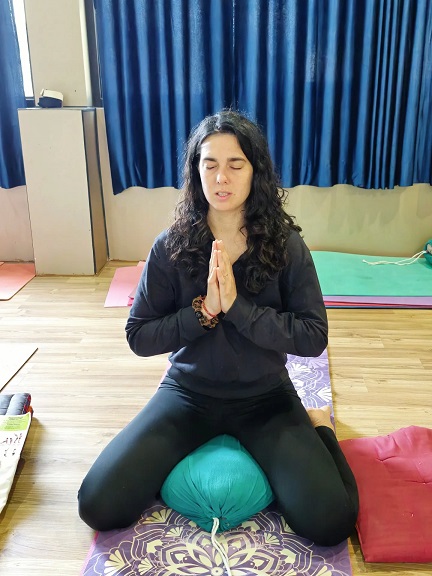
- Kneel on the ground to begin. For comfort, think about utilising a yoga mat. By contacting the big toes, the bottoms of the feet should be facing upward.
- As you recline on your legs, breathe out. Your calves will support your thighs, and your heels will support your buttocks.
- Once you’re comfortable, place your hands on your thighs and slightly move your pelvis backwards and forward.
- Maintain a straight neck, head, and spine. Put your eyes closed and begin taking deep breaths. Push your tailbone toward the floor while lifting your body using only your head as a lever.
- Breathe naturally, inhaling and exhaling.
- Lift your lower legs’ glutes and thighs gradually until you are back in a kneeling position to exit the Vajrasana pose. Then slowly rise.
For how long should you hold the Vajrasana Posture?
Start by doing three to four minutes of this asana if you are just starting your yoga journey. You can extend the time to 5-7 minutes as you advance.
After a meal, such as dinner, you can practise the Vajrasana posture. This pose can also be performed without food in your stomach. You can extend the asana’s duration to 15-20 minutes or even longer, depending on your strength and comfort.
Common Mistakes in Vajrasana (And How to Fix Them)
Most people learn this pose from a video and pick up small habits that take the benefit out of it. Check yourself against these:
- Crossing the toes. The big toes should touch, with the rest of the feet flat and soles facing up. Crossed toes twist the ankle and start hurting within minutes.
- Rounding the lower back. This is the most common one in our beginner batches. The moment the spine slumps, the pose stops helping digestion and starts tiring the back. Sit against a wall for the first week if you need to.
- Sitting on a bed or soft mattress. The surface has to be firm. A soft base tilts the pelvis, and you lose the upright line completely.
- Dropping the chin. Keep the head level, eyes soft or closed. Chin down closes the throat and shortens the breath.
- Holding the breath without realising. People concentrate so hard on sitting still that they stop breathing normally. Breathe as you would sitting on a chair.
- Sitting too long on day one. Three minutes is enough at the start. Twenty minutes on the first day will leave your knees sore for two days, and you will not want to return.
Why Do My Legs Go Numb in Vajrasana?
This is the question we hear most often in the first week of every training. It worries people, and it should not.
When you sit back on your heels, you press on the blood vessels and nerves running down the back of the leg and around the ankle. Circulation slows. The feet begin to tingle, then feel heavy or “asleep”. This is mechanical pressure, not damage.
What is normal: tingling after three to five minutes at the start, and a pins-and-needles feeling for a minute or two after you stand up.
What is not normal: sharp pain in the knee, pain on the inside of the ankle, or numbness that stays for more than a few minutes after standing. Those mean you should stop and check your setup, or see a doctor if it repeats.
The good news is that it fades. In our batches, most students cannot hold Vajrasana past two or three minutes in week one. By the third week, almost everyone sits comfortably for ten. Nothing changed in their bodies except that the tissue around the ankles and knees adapted to the pressure.
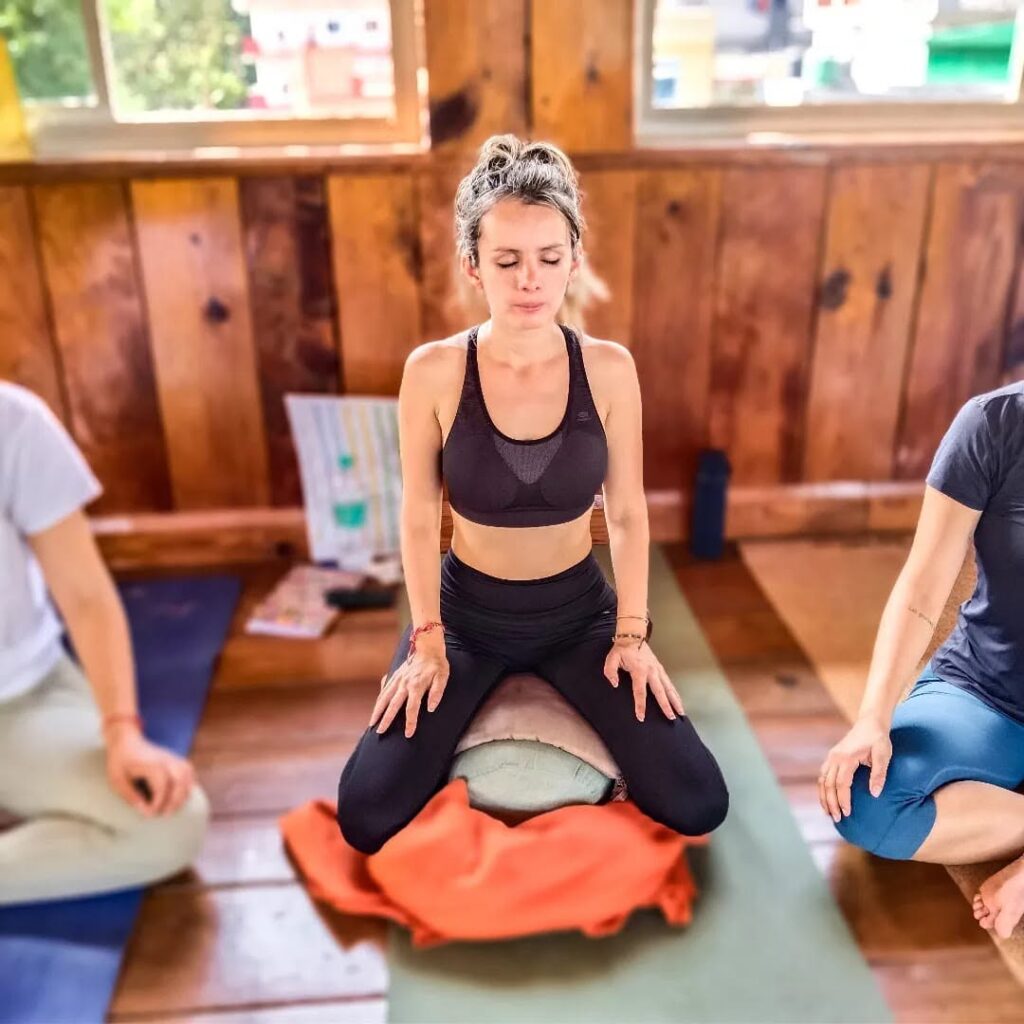
If you want to speed it up, put a folded blanket between your thighs and calves. It lifts your weight off the heels and the numbness largely disappears.
Vajrasana and Diabetes
Vajrasana is often recommended for people managing type 2 diabetes, and it is worth being clear about why.
The pose does not lower blood sugar by itself. What it does is support the digestive process after eating, and it gives you a simple, seated habit that is easy to keep every single day. Sitting quietly for ten minutes after a meal instead of lying down or going straight back to a screen is a small change that most people can actually sustain.
Some practitioners also pair it with gentle breathing, which helps with the stress side of blood sugar management.
Please treat it as a supporting practice. It works alongside your medication, diet, and your doctor’s advice, not instead of them. If you have diabetic neuropathy or reduced sensation in your feet, speak to your doctor before sitting in this pose at all, because you may not feel the warning signs that tell others to come out.
How Long After Eating, and How Long to Sit?
This is what makes Vajrasana unusual. Nearly every other asana asks for an empty stomach. This one does not.
- When to sit: straight after the meal, or within five to ten minutes of finishing. You do not need to wait.
- How long: five to fifteen minutes is the traditional range. Ten is a good target.
- Why it works: sitting upright with the knees folded keeps the abdomen open and the spine tall, which is a far better position for digestion than slumping on a sofa. Blood flow shifts away from the legs toward the middle of the body.
If you only ever use Vajrasana in one way, use it this way. Ten minutes after dinner, before you touch your phone. It is the easiest yoga habit to keep because it fits into time you were going to spend sitting anyway.
Vajrasana vs Sukhasana vs Padmasana: Which Seat Should You Use?
All three are meditation seats. They suit different bodies.
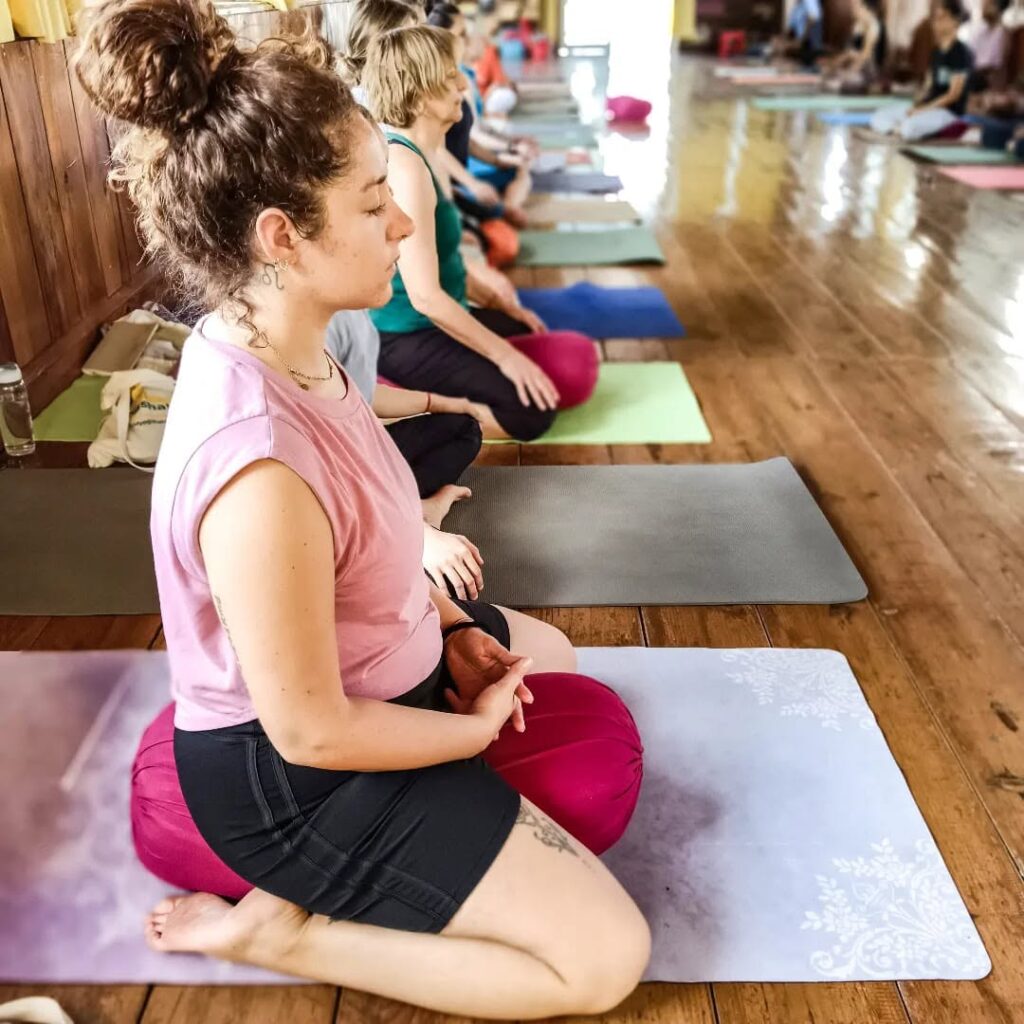
- Sukhasana (easy pose) is a simple cross-legged sit. Easiest on the knees, but most beginners find their back rounds after a few minutes unless they sit on a cushion. Good for long meditation if your hips are open.
- Vajrasana (thunderbolt) keeps the spine upright almost automatically, because of how the pelvis sits over the heels. Hardest on the knees and ankles. The only one of the three you can use after a meal.
- Padmasana (lotus) is the most stable of the three and the most demanding. It needs open hips, and forcing it is the fastest way to injure a knee. Not a beginner’s seat, whatever the photographs suggest.
Simple rule: if your back keeps collapsing in Sukhasana, try Vajrasana. If your knees complain in Vajrasana, go back to Sukhasana on a cushion. Leave Padmasana until a teacher tells you your hips are ready.
Variations of Vajrasana
Once sitting is comfortable, the pose opens into several others:
- Ardha Vajrasana (half thunderbolt): one leg folded back, the other extended or crossed in front. Useful if one knee is stiffer than the other.
- Supta Vajrasana (reclined thunderbolt): leaning back from Vajrasana until the head or back reaches the floor. A strong stretch through the thighs and abdomen. Not for beginners, and not for anyone with knee trouble.
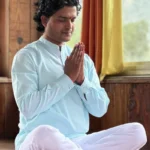
- Vajrasana with Namaskar Mudra: palms joined at the chest. Used for prayer and chanting.
- Vajrasana with Anulom Vilom: the seat for alternate nostril breathing. The steadiness of the pose makes the breath easier to control.
Vajrasana is also the starting position for Ustrasana, Shashankasana and Supta Vajrasana. Time spent learning to sit well here is repaid several times over.
Safety Precautions for the Vajrasana Posture
Vajrasana is a gentle and beginner-friendly pose, but it is still important to practise it with care, especially if you have any existing health concerns.
- Avoid this pose if you have serious knee pain, recent knee surgery, or ligament injuries, as sitting on the heels can put pressure on the joints.
- People with ankle stiffness or pain should be careful and avoid forcing the position. You can place a cushion or folded blanket under the ankles for support.
- If you feel numbness, tingling, or discomfort in the legs, slowly come out of the pose and relax. Do not sit for too long in the beginning.
- Those with severe lower back issues should practise under guidance to maintain proper posture and avoid strain.
- Pregnant women should consult a doctor or a qualified yoga teacher before practising Vajrasana.
- Always keep your spine straight but relaxed. Do not overstrain your back or shoulders while sitting.
- Start with a few minutes and gradually increase the duration as your body becomes comfortable.
Practising with awareness is important. Listen to your body and avoid pushing yourself into discomfort.
Also Read – How To Perform Supta Vajrasana (Reclined Thunderbolt Pose) and its Health Benefits
Modifications of Vajrasana Pose
Vajrasana is a simple pose, but not everyone may feel comfortable sitting directly on their heels in the beginning. Small adjustments can make the posture easier and more supportive, especially for beginners or those with stiffness.
- If you feel pressure in your knees, place a folded blanket or cushion between your thighs and calves. This reduces strain and makes it more comfortable to sit.
- For ankle discomfort, you can keep a soft support under the ankles to avoid excessive stretching.
- If sitting fully down feels difficult, use a yoga block or a cushion to sit on. This helps keep the spine straight without putting too much weight on the knees.
- People who experience tightness in the legs can start by holding the pose for a shorter time and slowly increase the duration as the body adapts.
- If your back tends to round, sit against a wall for support so you can maintain an upright posture.
- You can also keep your knees slightly apart instead of together if that feels more natural for your body.
These small changes make Vajrasana more accessible without losing its benefits. The idea is to stay comfortable while maintaining proper alignment.
Final Thoughts
Vajrasana is one of the few poses you can practise in ordinary clothes, in an ordinary room, five minutes after dinner. That is its real value. It asks for no flexibility, no warm-up and no empty stomach, so it survives the days when the rest of your routine falls apart.
Start with three or four minutes. If the knees complain, put a folded blanket between your thighs and calves before deciding the pose isn’t for you — most people who say they cannot sit in Vajrasana have never tried it with support. Pins and needles in the feet are common in the first weeks. That is a signal to come out slowly, not to push through.
Be sensible about what you expect from it. It supports digestion, keeps the spine upright and settles the mind, which is why it has stayed in daily practice for centuries. It is not a treatment for a medical condition. If you have a knee injury, recent surgery, a spinal problem, or you are pregnant, speak to your doctor and sit under a teacher who can watch your alignment.
One last thing worth knowing: Vajrasana is the foundation for Supta Vajrasana, Ustrasana, and several other postures. Time spent learning to sit well here saves you trouble later. If you want that depth, the anatomy and reasoning behind the pose rather than just the instructions, it’s the kind of thing a proper 200 hour yoga teacher training in Rishikesh is built to give you.
Vajrasana Pose FAQs
What are the benefits of the Vajrasana pose?
Ans: Vajrasana offers many health advantages, strengthens your digestive system, and enhances general health. Additionally, it lengthens your spine, which enhances posture.
How long should you sit in Vajrasana?
Ans: You can start by doing three to four minutes of Vajrasana if you are just starting your yoga journey. You can extend the time to 5-7 minutes as you advance.
Does Vajrasana reduce belly fat?
Ans: Yes, Vajrasana aids in belly fat reduction. This yoga pose improves digestive health and aids in the best possible utilization of the micronutrients from our food. It aids in controlling your BMI (body mass index).
Is Vajrasana good for meditation?
Ans. Yes, many people use this pose for meditation and breathing practices because it helps keep the body steady and the mind calm.
Who should avoid Vajrasana?
Ans. People with knee injuries, ankle pain, or recent surgery should avoid this pose or practice it carefully with proper guidance.
Last Modified Date: 11-April 2026
This article is for general information and is not medical advice. If you have a respiratory or heart condition, are pregnant, or are unsure whether these practices suit you, please speak to your doctor before beginning.

 +91-8433225327,
 Rishikul Yogshala Rishikesh, Narayan Kunj, Jonk Village, Ram Jhula, Swarg Ashram, Rishikesh, Uttarakhand 249304
 By Airway
 By Railway
 By Bus/Cabs